Slopes
Slope construction projects require continuous verification of structural behaviour both during and after construction. Retaining walls, soil nails, ground anchors, and pre-stressed tiebacks must perform in accordance with geotechnical design assumptions.
Changes in groundwater levels, soil conditions, load redistribution, and long-term creep effects can influence slope stability over time. Without systematic monitoring, early warning signs of instability may go undetected, increasing safety and financial risks.
Modern Slope Stability Software and Geotechnical Monitoring Software therefore play a critical role in managing these risks by enabling long-term structural performance tracking beyond the active construction phase.
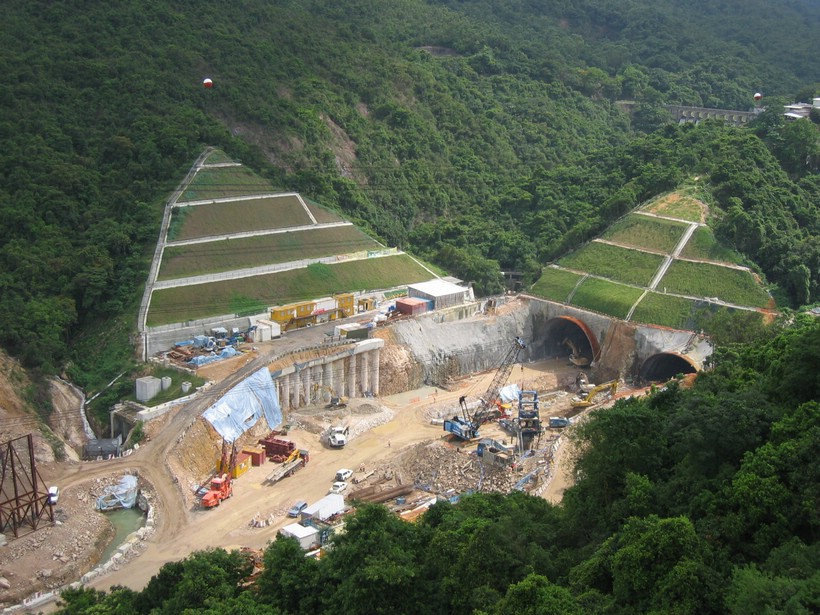
MissionOS functions as an advanced Slope Stability Monitoring and Geotechnical Data Management Software platform. It manages active construction data and continues tracking structural performance during post-construction phases, ensuring visibility across the entire slope lifecycle.
The system remotely communicates with in-place instruments such as inclinometers, strain gauges, settlement markers, piezometers, and anchor load cells, automatically collecting and processing data into structured time-series datasets.
As a scalable Geotechnical Analysis and Slope Data Management Software solution, MissionOS enables engineers to compare measured strain, displacement, anchoring stress, and groundwater behaviour against design predictions.
Instead of relying on manual readings over multiple years, the platform automates monitoring, reporting, and archiving — improving efficiency while maintaining continuous oversight.
How does MissionOS strengthen slope stability assurance and long-term geotechnical performance?
- Automatic remote data collection from in-place instruments and data loggers
- Scheduled creation, distribution, and archiving of reports
- SMS, email, and AAA alarm notifications with dynamic web-based logging
- Configurable AAA thresholds for different elevations and deflection profiles
- Import and comparison of design predictions against actual field performance
- Real-time monitoring of instrument operational status
- Integrated 3D modelling of monitored readings, structural components, and geological layers
- Sectional visualization combining lateral movement, groundwater levels, anchoring stress, and settlement
- Configurable shift reports to track construction progress
- Definition and grouping of soil nails and anchoring elements for construction auditing and management
MissionOS also provides integrated visualization tools, including real-time dashboards and 3D modelling environments that combine monitored data with structural elements and geological information.
Engineers can evaluate deflection trends, anchoring performance, lateral movements, water table variations, and settlement behaviour within a unified digital platform, improving decision-making and proactive risk management.
What risks are associated with long-term slope stability?
Changes in groundwater levels, soil stress redistribution, and creep effects can compromise retaining systems if not monitored continuously.
Continuous instrumentation monitoring ensures early detection of structural or geotechnical changes that may affect long-term slope stability.
How does MissionOS enhance slope stability assurance?
MissionOS automates remote data collection, predictive comparison, and alert management while providing integrated 3D visualization for comprehensive slope performance assessment.
By combining monitoring, analytics, and reporting within one digital platform, engineers gain continuous insight into slope behaviour throughout the asset lifecycle.
By centralizing monitoring, predictive comparison, visualization, and reporting within a single digital platform, MissionOS enhances slope stability assurance, reduces geotechnical risk, and supports long-term asset performance management.